
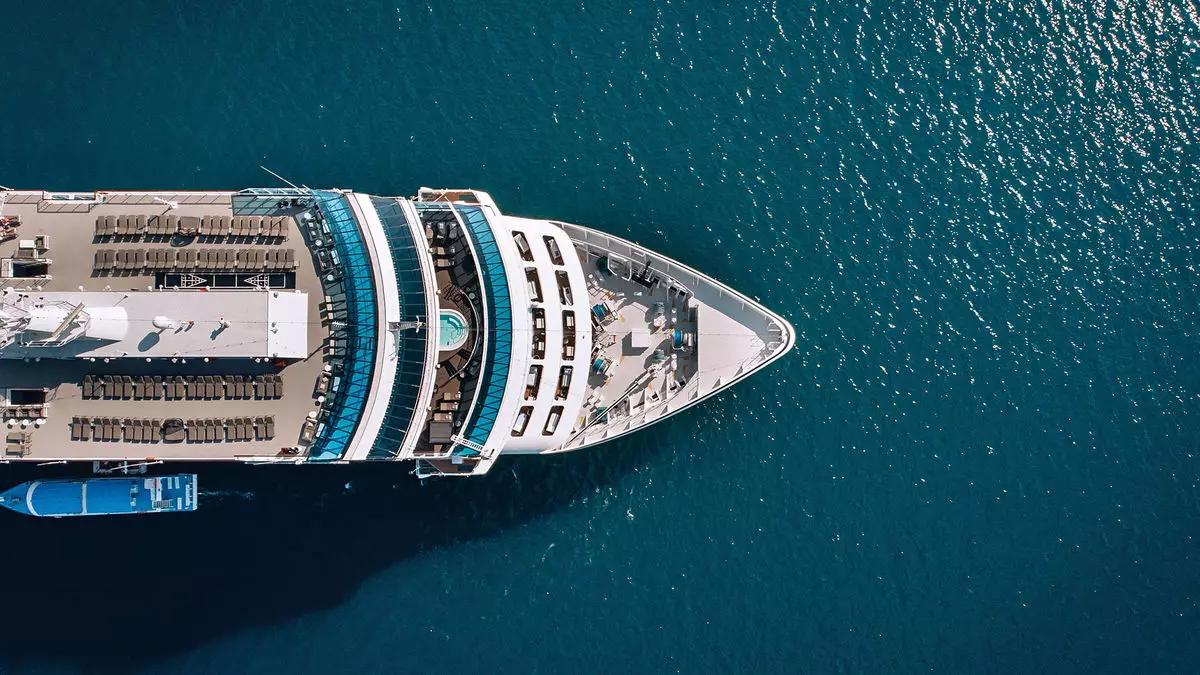
As discussions surrounding tax reforms gain momentum under the Trump administration, the cruise industry finds itself facing significant scrutiny. The remarks made by U.S. Secretary of Commerce Howard Lutnick during a recent Fox News interview indicated a potential shift in the taxation landscape for cruise lines. Lutnick’s comments have raised alarms within the industry about possible tax increases, which could reshape the financial dynamics of cruise operations in the United States.
Lutnick brought forth a pointed critique of the cruise industry’s tax practices, highlighting that many cruise ships do not sail under the American flag, instead opting for registries in countries such as Liberia or Panama, which are known for their favorable tax laws. His assertion that these foreign-flagged vessels contribute minimally to U.S. tax revenues raised eyebrows and sparked a debate about the fairness of the current taxation framework. With this administration’s focus on lowering American tax rates, the notion of imposing new taxes on cruise operators appears contradictory and leaves many questioning the administration’s priorities.
In stark contrast to Lutnick’s claims, the Cruise Lines International Association (CLIA) issued a strong rebuttal, emphasizing that cruise lines contribute nearly $2.5 billion in taxes and fees annually to the U.S. economy. This figure accounts for a staggering 65% of all taxes paid by cruise lines worldwide. Moreover, the cruise sector’s estimated contribution of $65 billion to the U.S. economy in 2023, coupled with the support of approximately 290,000 jobs, underscores the industry’s vital role in the national economy. This defense illustrates not only the cruise industry’s significance but also the potential repercussions any new tax policies could have on jobs and local economies.
The initial market response to Lutnick’s comments manifested in a downturn for cruise stocks, reflecting investor anxiety about potential policy changes. Patrick Scholes, an analyst at Truist Securities, characterized the immediate reaction as a “knee-jerk overreaction” while cautioning that the likelihood of tax changes could not be entirely dismissed. This highlights the volatility and sensitivity of the cruise market to political rhetoric, indicating that investor confidence can swiftly shift based on perceived risks to established business models.
The possibility of new tax regulations raises important questions about how such measures would be enforced, especially as many cruise operations remain outside the direct jurisdiction of the U.S. government. Analysts suggest that if tax increases were to occur, they might manifest in heightened port fees or payroll taxes rather than a straightforward income tax on profits. These adjustments could significantly impact operational costs, effectively altering the pricing landscape for cruise vacations.
As the cruise industry navigates these turbulent waters of potential tax reforms, it remains clear that the outcomes of such discussions will carry wide-ranging implications. The industry’s ability to adapt to a new tax environment while maintaining its substantial contributions to the U.S. economy will be paramount. Stakeholders must remain vigilant as developments unfold, considering both the economic impact and the long-term sustainability of this vibrant sector. The intersection of politics and business in the cruise industry is not just a matter of revenue; it encompasses broader questions of fairness, competitiveness, and economic stewardship.

- Best Travel Destinations In November - March 8, 2026
- How Far Can A Tsunami Travel - March 8, 2026
- Bible Verses For Safe Travel - March 8, 2026
Leave a Reply