
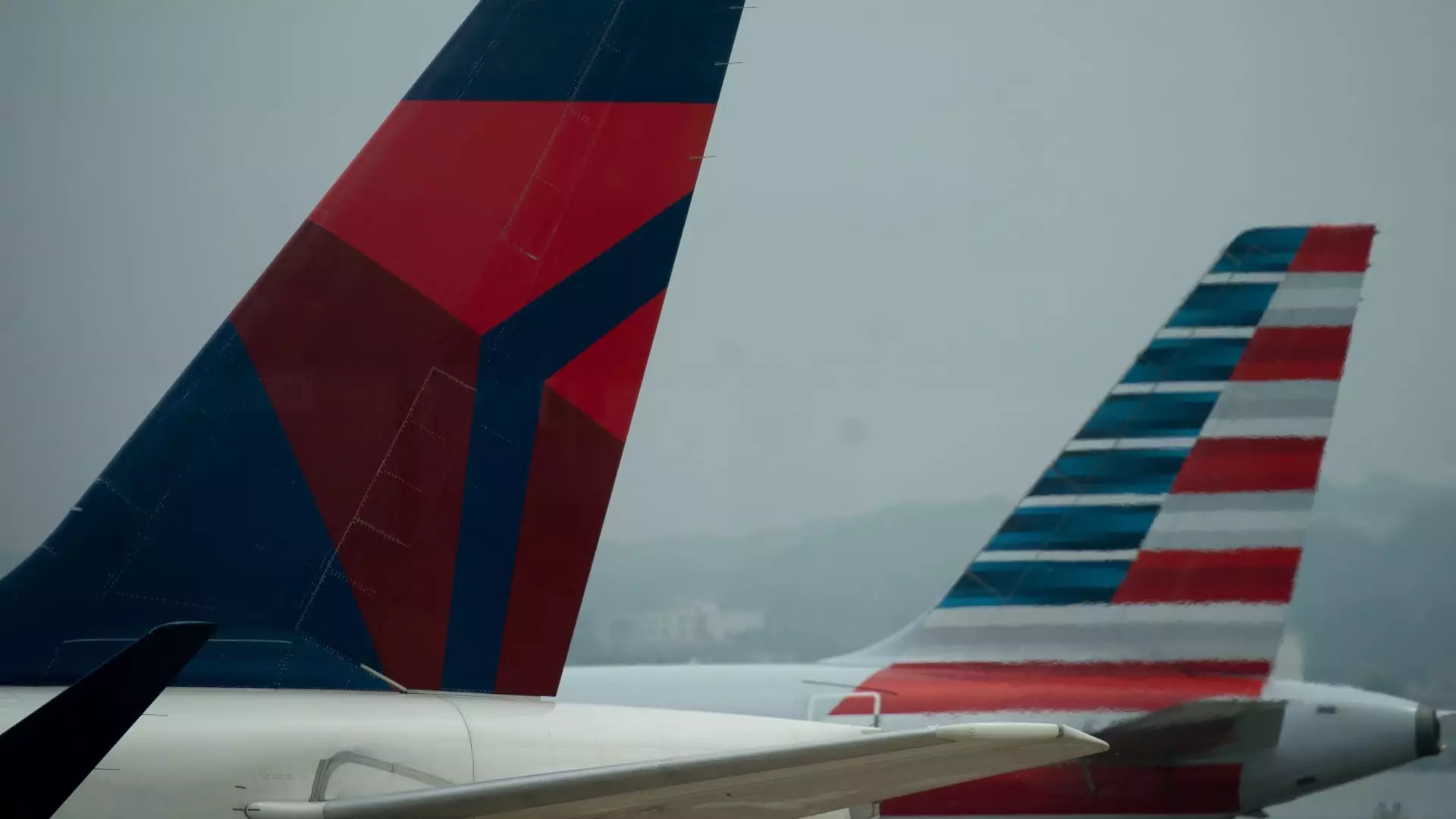
The airline industry, a barometer for economic vitality and consumer confidence, is facing turbulent skies as significant cutbacks in profit and sales forecasts emerge. As American Airlines and Delta Air Lines retract their optimism for the first quarter, signs are pointing to more than just a seasonal slump. This downturn is symptomatic of a deeper economic concern, one where consumer spending on travel is being reined in, and the ripple effect is felt throughout the sector.
American Airlines’ Bitter Forecast
Only recently, American Airlines projected losses for the upcoming quarter that far exceeded previous expectations. The anticipated range of 60 to 80 cents per share is a stark contrast to the previously estimated 20 to 40 cents. Revenue, which was initially expected to rise up to 5%, is now projected to stay flat. This severe downgrade can be traced back to several intertwined issues, including the impact of Flight 5342—a tragic collision that resonated through public sentiments—and a noticeable softness in domestic leisure travel. The implications stretch beyond financial sheets; they illustrate a consumer base that is reticent about travel amid uncertainty.
The Broader Landscape of Domestic Leisure Travel
While American Airlines points to specific incidents impacting their flight schedules, a broader trend is unraveling among all carriers—an uptick in hesitance to travel for leisure. In the wake of apparent economic instability, factors such as trade tariffs and changing government policies are indisputably clouding consumer attitudes. There seems to be a palpable pause among travelers, a collective holding of breath as they assess personal finances in unsteady times. CEO Ed Bastian’s observations about the cautious approach to travel are not just corporate rhetoric; they reflect real-world behaviors that lead to dwindling passenger numbers.
Delta and United Airlines: Echoing the Sentiment
Delta Air Lines’ recent slashing of its estimates mirrors American Airlines’ plight, as the company attributes this downturn to a decrease in both corporate and consumer confidence. The situation necessitates a reassessment of operational strategies, particularly for United Airlines, whose CEO Scott Kirby confirmed similar weaknesses in demand, not just in leisure travel but also in government and consulting sectors. It emphasizes how interconnected economic health and consumer behavior are to the travel industry.
United’s plan to retire 21 aircraft early is a tangible reaction to these decreasing numbers. The potential savings from eliminating costly engine overhauls are a tactical retreat in a battle against rising operational costs. Yet this move also reflects a realization that the demand narrative is shifting and that maintaining aircraft is increasingly untenable if those seats remain unfilled.
The Short-Term Strain on Revenue Models
Southwest Airlines has not been immune to the pressure exerted by these market shifts. Their recent adjustment from a forecasted rise in unit revenue to an almost halved projection signifies not just an internal shift but a dilution of market optimism. The decision to implement charges for checked baggage after a long-standing policy of complimentary service further underlines a desperation to adapt and generate revenue, even at the cost of customer loyalty.
Interestingly, while some airline stocks nosedive—Delta’s more than 7% drop serves as a case in point—other entities are finding ways to navigate through turbulence. JetBlue Airways, for instance, exhibited a modest gain even amid a threatening landscape, though this may reflect a short-lived buoyancy rather than sustainable growth.
Looking Forward: A Mixed Bag of Long-Term Trends
Amid these distress signals, the airline executives maintain a glimmer of hope rooted in long-haul international travel and premium demand. This dichotomy presents a fascinating picture of the industry teetering between precarious short-term realities and optimistic long-term potential. The resilience of premium travel may indicate that, while traditional leisure travel suffers, those with expendable income continue to seek out luxurious and exclusive travel experiences.
Nonetheless, whether this space can uplift the sagging fortunes of domestic carriers remains to be seen. With a shifting landscape underpinned by broader economic uncertainties, the coming months will be critical in shaping an airline industry that must often navigate between turbulent skies and hopeful horizons.

- Best Travel Destinations In November - March 8, 2026
- How Far Can A Tsunami Travel - March 8, 2026
- Bible Verses For Safe Travel - March 8, 2026
Leave a Reply