
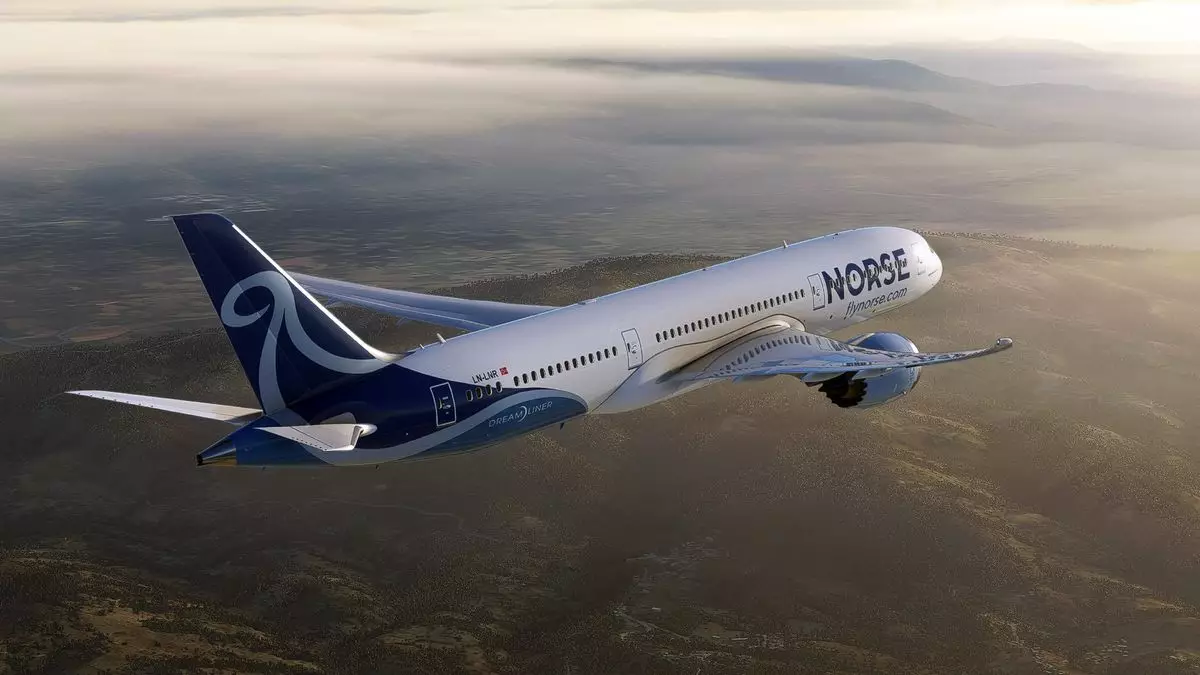
The pandemic disrupted the airline industry like never before, prompting a wave of innovation and adaptation among independent transatlantic leisure airlines. Yet, as we enter the summer of 2023, many of these airlines are grappling with a harsh reality: market conditions remain exceedingly turbulent. While demand for air travel rebounded sharply, it now clashes with an oversaturated market, particularly as traditional network airlines significantly bolster their capacity. As newcomers Norse Atlantic Airways and Play Airlines retreat, it’s clear that a profound transformation is taking place—one that could redefine the competitive landscape of transatlantic air travel.
The sharp increase in competition since the easing of travel restrictions is palpable. Play Airlines, for instance, has found itself in a precarious position, announcing substantial cutbacks to its U.S. routes after experiencing fierce competition, which Play’s CEO Einar Orn Olafsson acknowledges has intensified beyond pre-pandemic levels. That shift highlights a critical truth: while the travel resurgence has enticed many travelers, it has also invited a flood of seats that might not see their share of passengers. This dilemma is clearly illustrated in the struggle for position among airlines once regarded as disruptors.
Network Airlines Flex Their Dominance
Network carriers like United, Air France, and Lufthansa are capitalizing on this chaotic environment by projecting robust year-over-year capacity increases. Recent analyses, such as one by Deutsche Bank, forecast a tightening of supply as network airlines enhance their U.S.-Europe service by almost 4% as June approaches—a stark contrast to the shrinking presence of budget carriers. This increased capacity suggests a return to the pre-pandemic model, but with greater competition and sharpened strategies from established names in the industry.
For independent airlines, the past two years have witnessed the closure of icons like Norwegian Airlines and Wow Air, cementing the idea that budget operators face severe limitations in sustaining long-haul operations. Although there was a flicker of hope following the launches of Play and Norse Atlantic in 2021 and 2022 respectively, this optimism has since dimmed. Play, for instance, has suspended its flights from Reykjavik to Baltimore, significantly curtailing its U.S. presence and hinting at deeper systemic issues related to market viability.
A New Strategic Compass
Emerging from its own struggles, Condor, a veteran player in the field, has taken distinctive steps to adapt to changing market demands. This summer, Condor is focused on reinvigorating its transatlantic operations through strategic connections with various European destinations, seeking to reposition itself amidst dwindling North American routes. Offering connections to cities such as Paris and Milan could lure both leisure and business travelers alike.
What’s interesting is how Condor’s strategy marks a departure from its previous focus solely on U.S. warm-weather vacation spots, emphasizing the need for flexibly responding to shifting consumer behaviors in a post-pandemic context. The adaptability of established companies like Condor stands in stark contrast to the precarious positions occupied by more recent entrants in the budget space.
Quality and Competition: A Battleground
As competition stiffens, it becomes apparent that leveraging the product-to-price ratio is vital for survival. Condor’s executive team has pointed out that they typically undercut competitors by 25% to 50% across all classes, a strategy that could attract cost-sensitive travelers. However, this focus on pricing might still fall short without robust brand recognition and loyalty programs to drive repeat business—areas where Condor pales in comparison to Lufthansa and other traditional carriers.
The essential takeaway is that the market for transatlantic leisure travel is not merely about the cost of tickets but also about the overall travel experience. Airline quality regarding service, aircraft comfort, and operational reliability can significantly impact passenger choices, especially when economists predict that the airfare needs to align not just with competition but also with passenger expectations for comfort and convenience.
Fostering Industry Partnerships for Sustainable Growth
The strategic direction taken by carriers like Play emphasizes the growing importance of partnerships in the airline business, especially for those trying to carve a niche in a saturated market. Play has moved to lease several of its aircraft to other regional carriers, a tactical maneuver to mitigate operational challenges while maintaining exposure in the marketplace.
In a similar vein, Norse Atlantic’s decision to explore collaboration with larger, established airlines can facilitate growth and access to a broader range of travelers. Just as crucially, these partnerships can provide premium offerings that budget airlines historically find difficult to deliver. The potential for collaborative agreements might be the lifeline that allows them not only to survive but hopefully thrive amidst the ongoing turmoil of transatlantic travel.
The future of the transatlantic airline industry shows that in a field defined by the constant tug-of-war between affordability and quality, adaptability and strategic foresight will be essential in navigating this competitive landscape.

- Best Travel Destinations In November - March 8, 2026
- How Far Can A Tsunami Travel - March 8, 2026
- Bible Verses For Safe Travel - March 8, 2026
Leave a Reply