
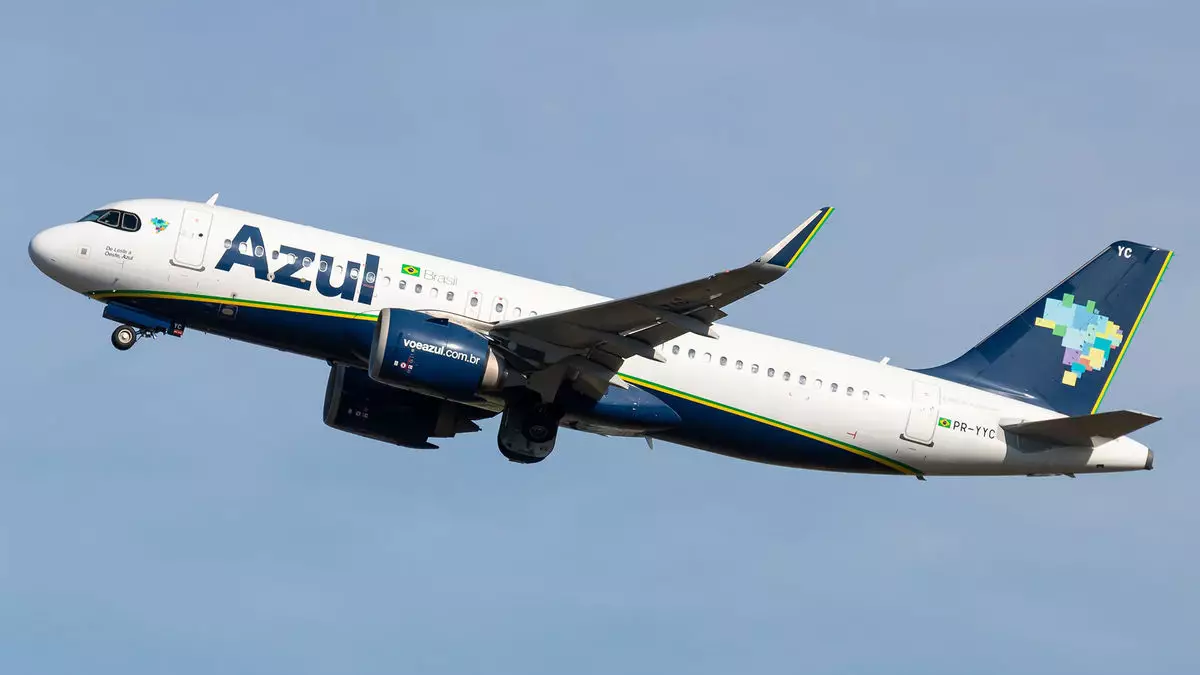
In a striking development in the aviation sector, Brazilian airline Azul has officially filed for Chapter 11 bankruptcy protection, a strategic maneuver that underscores the complexities inherent in the airline industry today. Unlike many businesses that might view bankruptcy as a harrowing end, Azul’s approach is refreshingly proactive; the carrier has entered this process armed with a prearranged restructuring package. This is not merely a retreat from fiscal responsibility but rather an essential step toward reigning in an alarming level of over $2 billion in debt, compounded by ongoing macroeconomic disruptions, the repercussions of the COVID-19 pandemic, and extensive supply chain challenges within the aviation market.
Azul is not alone in facing such turbulence; the airline landscape is rife with carriers grappling with similar financial distress. However, Azul stands out due to the noteworthy backing it has secured. The airline has long-standing support from United Airlines and has now garnered attention from American Airlines as well—a partnership that signifies its strategic vision for future growth.
Support from Giants: A Testament to Azul’s Potential
With a bolstered financial strategy that includes a staggering $1.6 billion in financing, Azul is poised to innovate even in challenging circumstances. This infusion of capital aims not just to alleviate its current debt burden but also to provide essential liquidity of $670 million during the restructuring process. The fact that both American Airlines and United Airlines are willing to invest significantly—combined estimates reaching up to $300 million—speaks volumes about their confidence in Azul’s long-term viability and operational trajectory.
The resilience demonstrated by CEO John Rodgerson emphasizes that the restructuring process transcends mere reorganization; it’s a calculated effort to emerge as a robust, industry-leading airline. The intention is to utilize this challenging phase to forge a more sustainable operational foundation, reflecting a will to evolve rather than merely survive. This strategic autonomy should not be underestimated; it positions Azul to capitalize on a market that, while fraught with challenges, is gradually rebounding.
Operational Continuity: Commitment to Customers
One of the defining commitments made by Azul during the Chapter 11 proceedings is its pledge to maintain operational continuity. The airline has assured passengers that it will honor all tickets, loyalty points, and agency commissions, thus prioritizing customer trust throughout this tumultuous period. In a landscape where consumer confidence can waver, Azul’s steadfast approach might carve a distinct niche, capturing loyal patronage during a time when competitors might falter.
Currently, Azul operates around 300 direct routes and maintains a fleet of 226 diverse aircraft, with active flights on eight U.S. routes—primarily serving the popular destinations of Fort Lauderdale and Orlando. Such operational resilience is indicative of the airline’s determination to remain a relevant player in both the domestic and international markets.
Paving the Way for Future Collaborations
Amidst these financial maneuvers, the imminent merging discussions between Azul and rival carrier Gol cannot be overlooked. A nonbinding memorandum indicates a willingness to explore a merger, which, if successful, would position a combined entity as the preeminent airline in Brazil, effectively dwarfing even the larger LATAM Airlines. The ambition of collaboration extends beyond intra-Brazil routes, potentially enhancing the connectivity and overall service experience for travelers in Latin America.
While American Airlines has prioritized partnerships with Gol, its recent engagement with Azul indicates a strategic pivot, recognizing the importance of diversifying alliances within the region. American’s chief strategy officer, Stephen Johnson, articulated a vision in which the synergistic combined offerings of Azul, Gol, and the Chilean carrier JetSmart could revolutionize travel connectivity throughout South America, presenting passengers with alternative, engaging options.
This evolving strategic landscape reflects a significant shift in how airlines view partnerships—favoring collaborative growth over competitive isolation. This shift holds the potential to reshape the dynamics of air travel in a continent rich with opportunity yet fraught with obstacles.
Azul Airlines is redefining its trajectory amidst financial turmoil by leveraging strategic partnerships, operational continuity, and an ambitious vision for collaborative growth. Their path forward may not be devoid of challenges, but with robust investments and innovative restructuring, there lies an optimistic horizon paved with opportunities to redefine air travel in Brazil and beyond.

- Best Travel Destinations In November - March 8, 2026
- How Far Can A Tsunami Travel - March 8, 2026
- Bible Verses For Safe Travel - March 8, 2026
Leave a Reply